From Ancient Mysteries to Future Agents: AI’s Expanding Reach
Today’s AI developments show a fascinating range of applications, proving that the technology is just as capable of looking backward into human history as it is of automating our digital futures. From decoding the pastimes of Roman-era soldiers to transforming how we interact with our health data and music, the narrative of the day is one of integration and discovery.
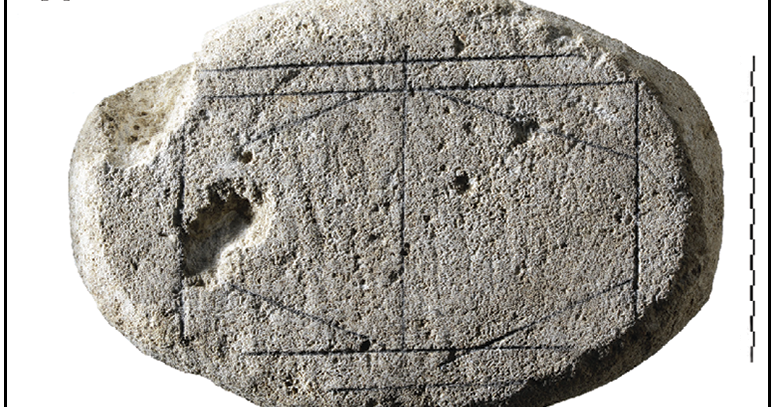
Perhaps the most poetic news of the day comes from the world of archaeology. Scientists have successfully used artificial intelligence to decode the rules of a mysterious ancient board game after researchers were long baffled by a smooth, white stone artifact from the Roman era. By analyzing the “deceptively simple” strategy of the game, AI helped experts understand how ancient players hunted and trapped opponent pieces. It is a striking reminder that while we often view AI as a tool for the future, its ability to recognize patterns makes it an invaluable lens for understanding the behaviors of humans who lived nearly two millennia ago.
Turning toward the corporate horizon, Apple is making significant moves to catch up in the high-stakes race for “agentic AI.” This refers to a shift from models that simply answer questions to those that can execute complex tasks on a user’s behalf. Analysts suggest that Apple’s Xcode environment is becoming an unseen engine for this transition, potentially leveraging technologies similar to OpenAI’s Codex or Anthropic’s Claude to help developers build more autonomous features. As Apple eyes a stock breakout, the focus is clearly shifting toward making the iPhone not just a smart device, but a proactive assistant.
The consumer experience is also seeing immediate, practical AI injections. Google has officially expanded the public preview of its Fitbit AI health coach to iPhone users, bringing personalized, conversational fitness insights to the iOS ecosystem. While it still requires a premium subscription, the move signals an aggressive push to make AI-driven wellness a standard part of the wearable experience. Similarly, YouTube is rolling out an AI playlist generator for its Premium subscribers, using generative models to help users curate soundtracks with more nuance than traditional algorithms could manage.
The overarching takeaway from today’s news is that AI is moving past the “novelty” phase. It is no longer just a chatbot we play with in a browser; it is becoming a foundational tool that helps us solve historical puzzles, write code more efficiently, and manage our physical health. Whether it’s reconstructing a Roman game or automating a software workflow, AI is increasingly acting as the connective tissue between data and human understanding.