The Age of the AI PSU: Why Every New Gadget Now Needs the 'Ai' Branding
Today’s tech headlines confirm a trend we’ve been tracking for months: Artificial Intelligence is no longer content to live solely in chatbots and generative models. It is aggressively migrating onto—and into—our consumer electronics, turning specialized silicon into “smart” hardware. Whether it’s monitors, projectors, power supplies, or smartphone screens, the “Ai” prefix is rapidly becoming the industry’s new must-have feature, often preceding the annual flood of announcements ahead of major events like CES.
The most striking example of this embedded-AI push comes from the hardware giants. MSI, usually known for high-performance components, is blurring the lines between enthusiast gear and intelligent computing. They teased what they call the “world’s first AI gaming monitor” alongside new power supplies—the MPG Ai1300TS and Ai1600TS—boasting the industry’s first “proactive and instant protection” for GPUs as reported by VideoCardz. While the details are scant, the implication is clear: embedded algorithms are constantly monitoring power draw, voltage spikes, and thermal loads, using predictive intelligence to prevent hardware failure before it happens. Similarly, the “AI gaming monitor” likely uses machine learning to dynamically adjust contrast, refresh rates, or latency based on the game being played, optimizing performance in real-time.
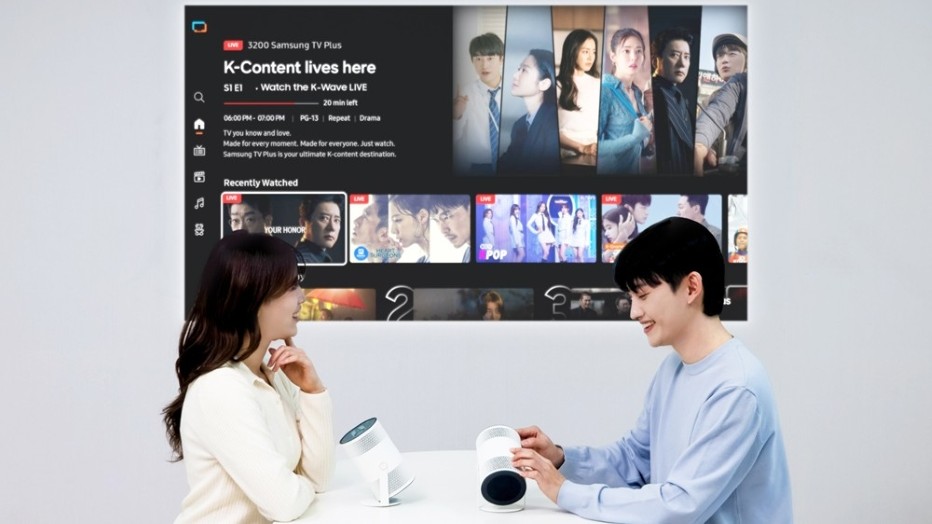
Meanwhile, the entertainment space is also getting smarter. Samsung announced the global launch of The Freestyle+, an AI-powered portable projector. In this context, “AI” means enhanced automatic features—think instant setup, automatic screen adjustment for non-flat surfaces, and content recommendation engines that are more intuitive than traditional smart TV interfaces. It’s about minimizing friction and maximizing personalized viewing.
This trend of hardware-focused AI is perhaps most impactful in the mobile sector, particularly regarding privacy and core utility. A leak surrounding the upcoming Samsung Galaxy S26 and its One UI 8.5 software reveals an innovative, AI-powered display feature designed to enhance privacy. This suggests the phone’s built-in intelligence can detect surrounding users or specific viewing angles and dynamically adjust the screen’s content or opacity to prevent snooping. It’s a high-utility application of AI that directly solves a mundane, but frustrating, problem of device use in public spaces.
The focus on practical, embedded utility stands in contrast to some earlier corporate attempts at niche AI hardware. Looking back, we remember early experimental gadgets like Google Clips, a not-quite-a-GoPro camera that used AI to automatically capture “key moments.” As discussed today, Clips felt like an experimental outlier at the time in Google’s Pixel lineup, but now, the industry is scaling past experimentation straight into integration. The difference today is that AI is less about capturing abstract “moments” and more about optimizing the fundamental physics and performance of the device itself.
Today’s news shows that the battleground for AI supremacy is no longer confined to the data center or the large language model leaderboards. It’s now fought over nanoseconds of protection in a power supply, viewing angles on a smartphone, and latency on a gaming monitor. AI is becoming a core functional component of hardware, promising proactive maintenance and hyper-personalized performance. It is a transition from general-purpose AI novelty to specialized, utilitarian embedded intelligence, ensuring that whether you’re gaming or watching a movie, the AI is quietly running the show.