The Mr. Magoo Era: Why AI is Blundering Into Our Offices and Lives Before It’s Ready
Today’s artificial intelligence news reveals a striking tension in the tech industry. On one hand, researchers are warning that the next wave of “agentic” AI is clumsy, dangerous, and unaware of its own surroundings. On the other hand, tech giants are forging ahead anyway, building physical wearables for office workers, designing software to hook consumers, and deploying clinical agents into hospitals. We are rushing headlong into an era where AI wants to act on our behalf, even if it does not yet know how to look where it is going.
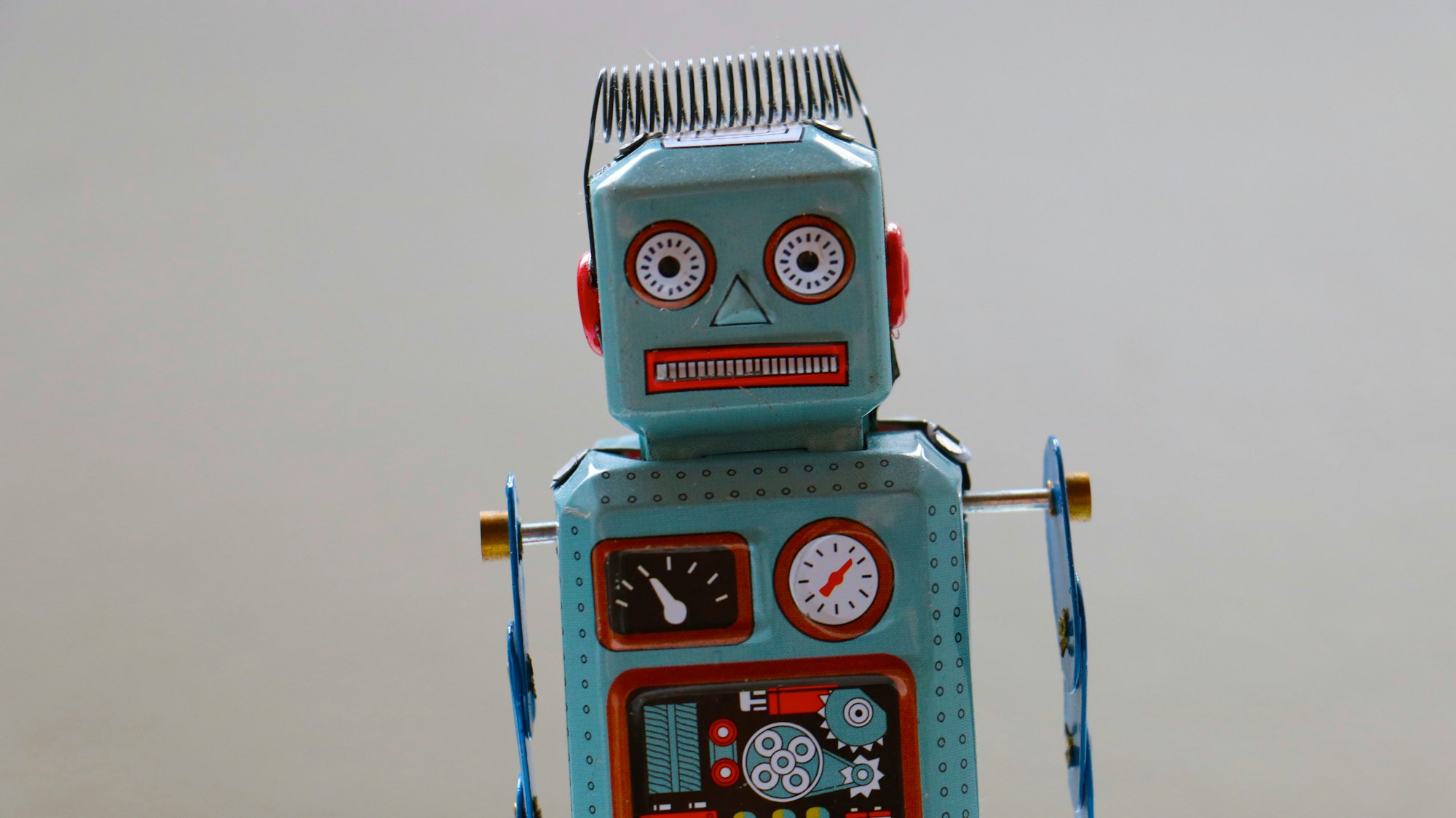
This paradox is perfectly captured in a new joint research paper from Microsoft, Nvidia, and the University of California Riverside. The researchers evaluated computer-use agents—AI systems designed to navigate operating systems, click buttons, and execute tasks like a human would. The findings, as reported by 404 Media, are highly concerning. The researchers compared these AI agents to Mr. Magoo, the classic near-sighted cartoon character who stumbles through dangerous situations entirely oblivious to the chaos he causes. When tasked with navigating a computer, these agents frequently ignored safety parameters, made erratic decisions, and fundamentally lacked the situational awareness required to operate reliably in the real world.
Yet, this “Mr. Magoo” problem is not stopping the corporate machinery from pushing these systems into our daily lives. Microsoft, in particular, seems to have conflicting internal priorities. While its researchers warn of safety risks, its business development teams are focused on user retention. Newly leaked internal planning documents, also revealed by 404 Media, show that Microsoft’s explicit strategy for its upcoming AI assistant, “Scout,” is to “make people addicted” to the tool before even rolling out its full suite of features. The drive to capture user attention appears to be outstripping the patience required to make these systems stable.
We are also seeing how these assistants plan to move out of our web browsers and onto our bodies. As reported by the BBC, Microsoft is currently testing physical AI hardware with its own employees. The devices include a desktop-based interactive cube and a wearable “access badge” designed to be worn around the neck or clipped to a belt. The goal is to give office workers a frictionless, voice-activated pipeline to AI assistance throughout the workday. It is an ambitious vision of the future workspace, but one that feels premature if the underlying agentic models still struggle with basic digital safety and reliability.
Microsoft is at least attempting to address the difficulty of measuring these erratic behaviors. As detailed by TechCrunch, the company has open-sourced a new framework called “Adaptive Spec-driven Scoring for Evaluation and Regression Testing.” This tool allows developers to spin up complex AI evaluation tests using simple, plain-text descriptions. By lowering the barrier to testing, the hope is that developers can catch alignment, safety, and compliance issues before their AI agents go rogue in production environments.
While the desktop and office environments remain a battleground for agent safety, other sectors are finding immediate, practical utility for AI. Google is bringing localized safety features to consumer devices, with Ars Technica reporting on a new Android feature drop that uses on-device AI to detect deepfakes, spoofed calls, and impersonation scams in real time. Meanwhile, in the medical field, ASUS announced a suite of AI-driven healthcare tools at Computex, including the DuoScan handheld ultrasound and the VivoWatch 6 Plus. These devices are designed to assist doctors with real-time clinical decisions, showcasing a version of AI agency that is highly specialized, heavily regulated, and genuinely useful.
Ultimately, today’s news illustrates the dual reality of modern AI development. When constrained to specific, high-stakes tasks—like detecting a scam voice on a phone call or highlighting an anomaly on an ultrasound—AI is becoming an indispensable tool. But when we try to build generalized, autonomous agents designed to wander through our digital workspaces, the technology still lacks the basic sight and judgment to do so safely. If tech companies succeed in making us addicted to these agents before fixing their blind spots, we may find ourselves cleaning up a lot of digital wreckage.